
Why Does My Deck Feel Sticky Even After It Rains
/ Uncategorized / By Zach Francis
Your deck feels sticky after rain because your sealant has broken down and can no longer repel moisture. Instead of beading water off the surface, it absorbs it, turning tacky and adhesive. Degraded coatings also trap algae, mold, and mildew, which form a sticky biofilm that worsens with humidity and shade. Identifying the exact cause behind your deck’s stickiness is the first step toward fixing it for good.
Key Takeaways
-
Degraded sealant loses its moisture-repelling ability, becoming tacky when wet, which explains persistent stickiness even after rainfall cleans the surface.
-
Algae, mold, and mildew create a sticky biofilm on deck surfaces that rainfall alone cannot remove.
-
Humidity and shade worsen biological growth and sealant breakdown, intensifying stickiness in damp conditions.
-
Applying new sealant over degraded old coatings compounds the problem, creating an uneven, tacky surface layer.
-
UV exposure, moisture cycling, and temperature fluctuations accelerate sealant degradation, leaving a tacky residue that worsens after rain.
What Makes a Deck Feel Sticky After Rain?
After rain, a sticky deck is almost always a sign that something is breaking down on the surface—and the culprit is usually old sealant, biological growth, or a combination of both.
When sealant degrades, it loses its ability to repel moisture and instead becomes tacky as water activates the deteriorating compounds. Algae, mold, and mildew create a biofilm that feels slick and adhesive underfoot, particularly after rainfall.
Environmental factors like humidity, shade, and organic debris accelerate this breakdown considerably. Without consistent deck maintenance, these conditions compound over time, embedding deeper into the wood grain.
Rain doesn’t wash these contaminants away—it rehydrates them, making the stickiness more pronounced. Identifying the specific cause is the first step toward an effective, lasting solution. Regular maintenance is essential for long-term durability and can prevent these issues from arising.
Old Sealant and Deck Stain Are Usually the Culprit
When deck sealant and stain break down, they don’t simply wear away cleanly—they oxidize, soften, and develop a tacky residue that clings to foot traffic and debris.
UV exposure, moisture cycling, and temperature fluctuations accelerate this degradation, leaving behind a compromised film that traps contaminants instead of repelling them. One of the most overlooked deck maintenance tips is recognizing when a previous sealant application has failed rather than simply aged.
Failed coatings don’t disappear—they bond poorly, peel unevenly, and create a sticky surface layer that worsens with heat and humidity. If your deck feels tacky, the existing coating has likely crossed the threshold from protective to problematic.
Applying new product over degraded sealant won’t fix the issue—it compounds it. Proper removal comes first. Additionally, regular house washing can help maintain the integrity of your deck by preventing excessive buildup.
How Humidity and Heat Make the Problem Worse
Heat and humidity don’t just make your deck uncomfortable to stand on—they actively accelerate sealant breakdown and amplify the sticky surface conditions that a failing coating already creates.
High temperatures soften residual sealant, causing it to become pliable and tacky underfoot. When you combine that heat impact with elevated moisture levels, you create a surface environment where degraded resins can’t cure or stabilize properly.
Humidity effects compound the issue by preventing evaporation. Trapped moisture beneath a compromised sealant layer prevents the wood from drying out between weather cycles, keeping the surface in a perpetual semi-soft state.
Portland’s wet, warm summers are particularly punishing for older deck coatings. If your deck feels worse in July and August than in winter, your sealant has almost certainly reached the end of its service life. Additionally, eco-friendly cleaning solutions can help maintain your deck’s appearance and prolong the life of its surface treatments.
Why Pressure Washing Removes Sticky Residue for Good
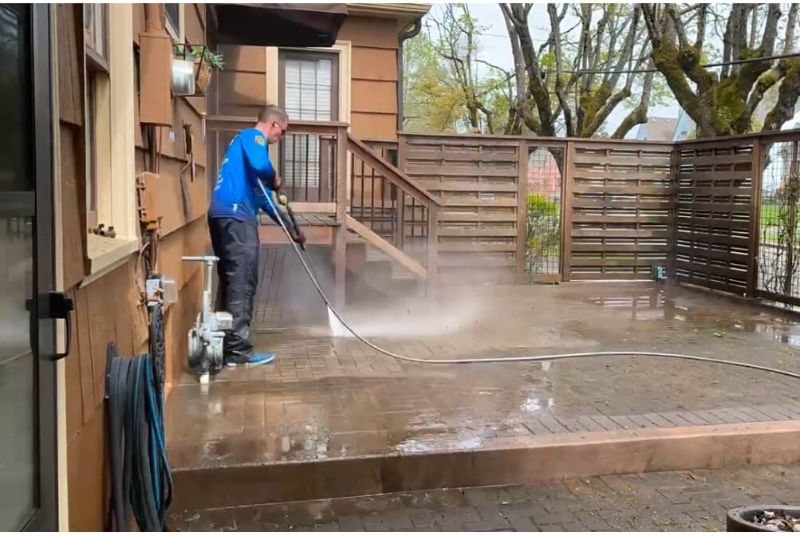
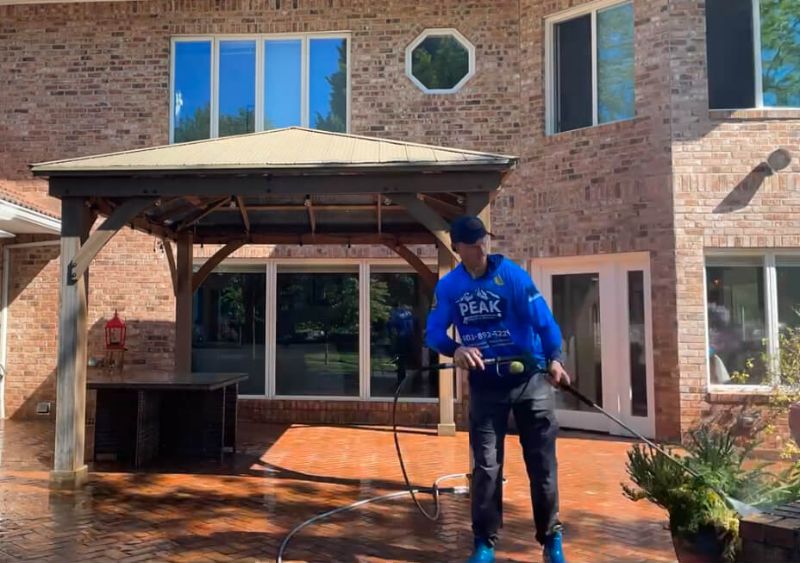
Pressure washing doesn’t just clean the surface of your deck—it physically strips degraded sealant, oxidized resins, and biological growth from the wood grain itself.
Among the most effective sticky residue solutions available, high-pressure water penetrates microscopic surface pores, dislodging contaminants that rain, scrubbing, and household cleaners can’t reach.
The pressure washing benefits extend beyond aesthetics. By removing the tacky molecular layer left behind by broken-down coatings and organic matter, you’re eliminating the actual source of the problem rather than masking it.
Once the surface is properly cleaned, fresh sealant bonds correctly, cures evenly, and resists future breakdown.
Without that initial deep clean, any reapplication simply traps the existing residue underneath, restarting the same degradation cycle your deck has already been through. Proper pressure washer settings ensure that the deck is cleaned effectively without causing damage.
When to Reseal Your Deck After a Deep Clean
After pressure washing your deck, you’ll want to reseal it before moisture and UV exposure break down the wood fibers again.
Watch for signs like water absorption instead of beading, gray or faded wood tone, and a rough, dry texture — these all indicate the surface needs a fresh protective coat.
Timing matters, so wait until the deck has dried completely for at least 48 hours, and aim to reseal during mild, dry weather between 50°F and 90°F for the best adhesion and finish. Additionally, understanding specific deck material needs is crucial for ensuring a long-lasting seal.
Signs It Needs Resealing
Once your deck has been professionally cleaned, how do you know if it’s ready for a new coat of sealant? The water bead test is your most reliable indicator. Sprinkle water onto the surface — if it absorbs rather than beads up, the existing sealant has failed. Proper deck maintenance depends on catching this early before moisture penetrates the wood grain.
Other signs include graying or fading color, surface cracking, splintering edges, and a rough texture underfoot. These indicate UV damage and moisture exposure that effective sealing techniques can reverse.
You should also reseal if the deck feels sticky after rain, which signals sealant breakdown and residue accumulation. Typically, most decks require resealing every one to three years depending on wood type and weather exposure.
Best Time To Reseal
Knowing when to reseal matters just as much as knowing whether to reseal. Timing directly affects adhesion, penetration, and long-term protection.
After a deep clean, you’ll need to wait until the wood is completely dry — typically 48 to 72 hours under dry conditions. Applying sealant to damp wood traps moisture and accelerates the exact decay you’re trying to prevent.
For resealing frequency, most decks require treatment every one to three years, depending on wood type, foot traffic, and sun exposure. Hardwoods hold sealant longer; softwoods absorb and release it faster.
As part of your deck maintenance tips, schedule resealing in late spring or early fall when temperatures stay between 50°F and 90°F and rain isn’t forecasted for at least 24 hours.
Signs Your Deck Needs Professional Cleaning
If your deck has visible grime buildup, discoloration, or a slippery surface, it’s telling you it needs professional attention.
Algae, mold, and oxidized sealant residue don’t just look bad—they compromise the structural integrity of the wood and create safety hazards underfoot.
Recognizing these warning signs early lets you address the problem before it escalates into costly repairs or replacements.
Visible Grime Buildup
Visible grime buildup is one of the most obvious signs your deck needs professional cleaning. You’ll notice dark streaking, discoloration, and thick layers of dirt embedded in the wood grain or between boards.
These deposits don’t appear overnight — environmental factors like rainfall, wind, and organic debris accelerate accumulation over time. Algae, mold, and mildew create dark patches that penetrate surface fibers, making standard rinsing ineffective.
Proper deck maintenance requires more than a garden hose; you need targeted pressure washing to extract contaminants from deep within the material. If you’re seeing green tinting, black spots, or a grimy film that persists after rain, that’s your deck signaling it’s overdue for professional attention.
Ignoring it accelerates surface degradation.
Slippery or Discolored Surfaces
Slippery and discolored surfaces signal biological growth that’s compromising both your deck’s safety and structural integrity. When algae, moss, or biofilm colonize your deck’s surface, they create a hazardous film that standard rainfall won’t eliminate.
You’ll notice gray, green, or black streaking across the wood grain — clear indicators that organic matter has penetrated beyond the surface layer.
Ignoring these signs accelerates wood fiber breakdown, leading to premature deterioration and costly repairs.
Effective deck maintenance requires targeted cleaning solutions formulated to neutralize biological growth at its root rather than simply masking discoloration. Surface-level scrubbing won’t reach embedded organisms.
Professional cleaning applies the correct chemical concentrations and pressure levels to restore traction, remove staining, and prevent regrowth — protecting your deck’s structural integrity long-term.
Frequently Asked Questions
Can Sticky Deck Residue Transfer Onto Outdoor Furniture or Shoes?
Yes, sticky residue can transfer onto your furniture and shoes. You’ll need proper deck cleaning methods and residue removal techniques to eliminate the tacky buildup before it spreads contaminants across your outdoor living space.
Is a Sticky Deck Surface More Slippery and Dangerous When Wet?
Yes, sticky residue creates dangerous slippery surfaces when wet, amplifying your safety concerns markedly. You’re walking on a film that reduces traction, increasing your risk of slips and falls requiring immediate professional cleaning attention.
How Long Does a Freshly Sealed Deck Take to Fully Cure?
Your freshly sealed deck typically takes 24–72 hours to cure, depending on sealant application methods and weather conditions. For ideal deck maintenance tips, you’ll want to avoid foot traffic and moisture exposure until it’s fully hardened.
Does Sticky Residue Attract Insects or Pests to My Deck?
Yes, sticky residue sources like uncured sealers, sap, and organic buildup are key insect attraction factors. They draw ants, beetles, and flies to your deck, so you’ll want to address the residue promptly.
Can I Apply New Sealant Over Old Sticky Deck Stain?
You shouldn’t apply new sealant over old sticky stain. For proper deck maintenance, you’ll need to strip the failing product first. Different stain types require specific prep steps to guarantee proper adhesion and a lasting, clean finish.
Conclusion
Your deck feels sticky after rain because of degraded sealant, biological growth, or environmental residue — none of which rainwater can dissolve on its own. You’ll need to pressure wash the surface, remove the old sealant completely, and apply a fresh coat once the wood dries. Skipping any of these steps means the stickiness returns. Address the root cause now, and you’ll restore both the deck’s function and its structural integrity long-term.